
Simulation
DynoForge
A data-driven engine-simulation platform in C# and .NET 10, built for real-time mechanical, fluid, and acoustic modelling.
Actual development build
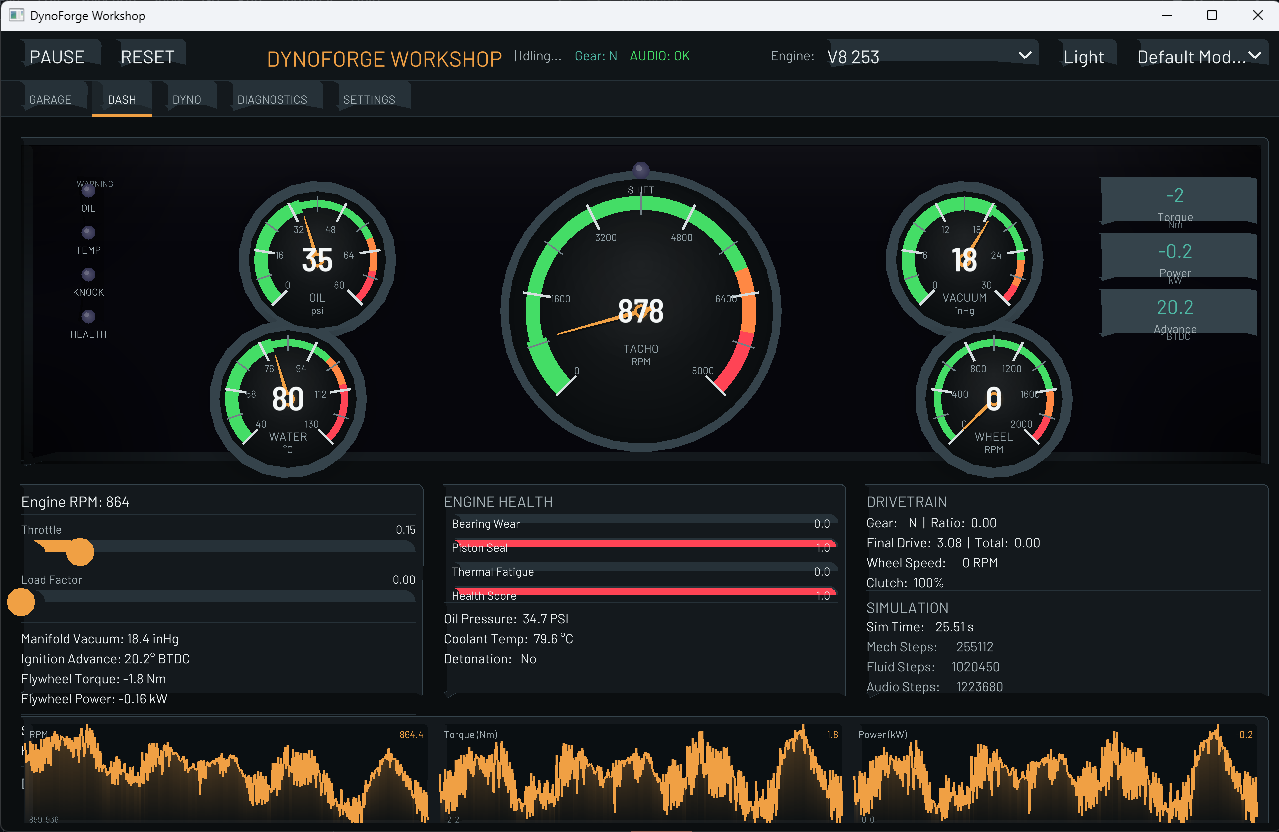
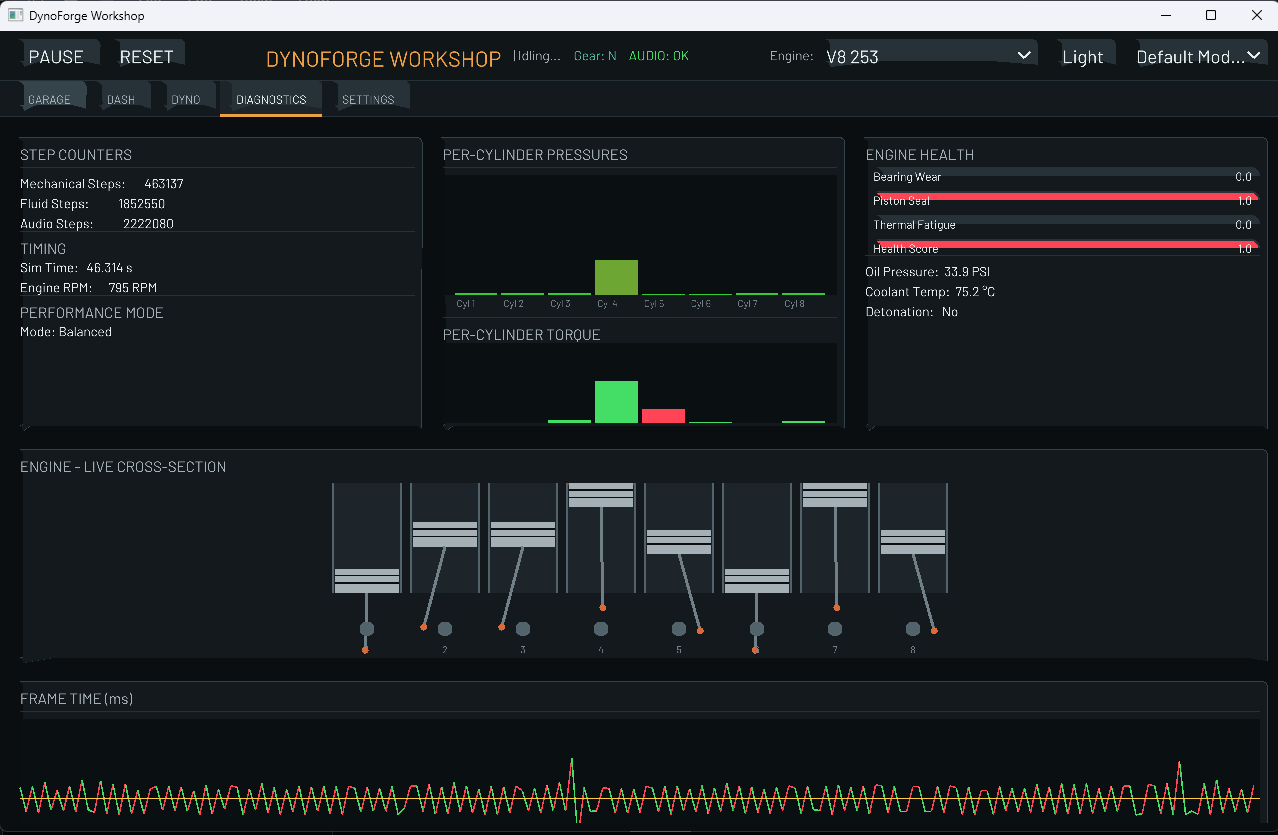
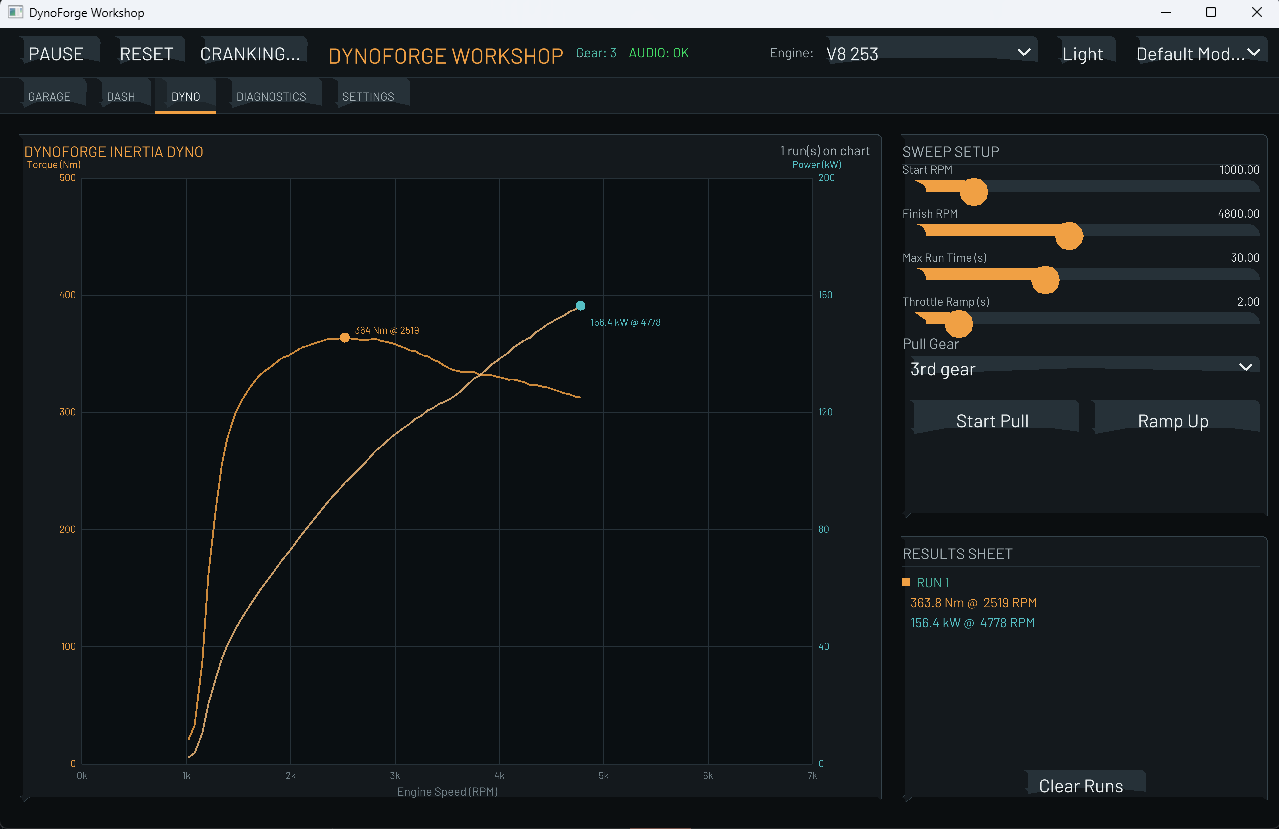
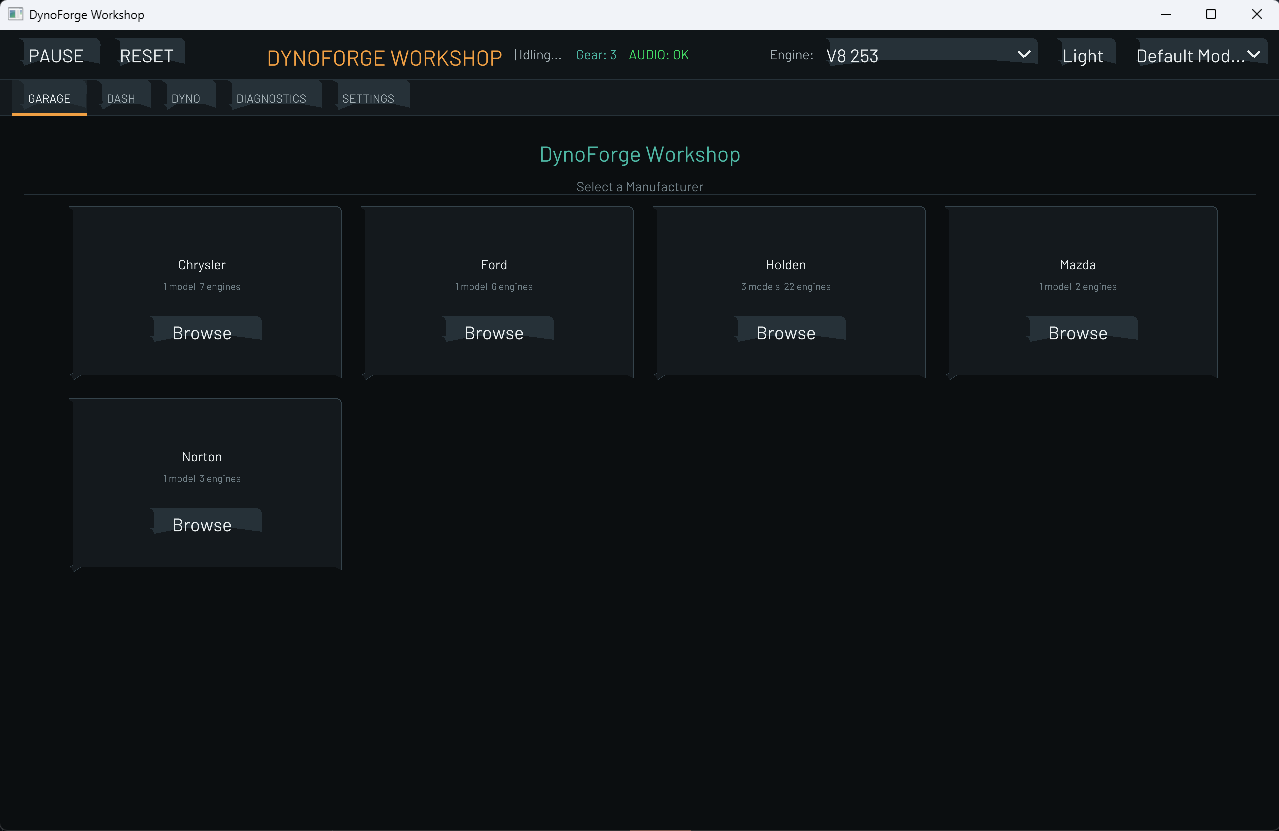
Four views of the same engine.
Working UI captures, kept deliberately rough. The point is the data and the simulation moving through it.
The work
Physics first, not vibes.
DynoForge models engine components as parameters rather than hardcoded combinations. External JSON packs can be discovered and swapped without recompiling the solver, while the simulation covers crankshaft dynamics, manifold fluid networks, component health, and crank-locked audio synthesis.
Recent reliability work keeps those rates and boundaries honest: a dedicated playback worker owns the OpenAL device queue, sequence-published snapshots protect UI readers from torn state, and solver reset paths clear state when an engine is replaced.
- Multi-rate mechanical, fluid, and audio simulation
- Zero-allocation hot paths shaped for Native AOT
- Recursive, swappable JSON engine packs
- Crank-locked audio driven by cylinder events
- Live health, diagnostics, and inertia-dyno views
- Thread-safe audio and UI state handoffs
Development alpha. These captures show the workshop; the latest reliability work is mostly under the hood.